
Coercion and the Kingdom of God
“. . . but the people there did not welcome him, because he was heading for Jerusalem. When the disciples James and John saw this, they asked, ‘Lord, do you want us to call fire down from heaven to destroy them?’ But Jesus turned and rebuked them.” Luke 9:53-55 (NIV)
“With that, one of Jesus’ companions reached for his sword, drew it out and struck the servant of the high priest, cutting off his ear. ‘Put your sword back in its place,’ Jesus said to him, ‘for all who draw the sword will die by the sword.’” Matthew 26:51-52 (NIV)
“In his right hand he held seven stars, and coming out of his mouth was a sharp, double-edged sword.”
“I will soon come to you and will fight against them with the sword of my mouth.”
“Coming out of his mouth is a sharp sword with which to strike down the nations.”
“The rest were killed with the sword coming out of the mouth of the rider on the horse.”
Revelation 1:16; 2:16; 19:15; 19:21 (NIV)
“Then one of the elders said to me, ‘Do not weep! See, the Lion of the tribe of Judah, the Root of David, has triumphed. He is able to open the scroll and its seven seals.’ Then I saw a Lamb, looking as if it had been slain.” Revelation 5:5-6 (NIV)

Coercion seems to have become part of the “kingdom of God project” for many American Christians. Much of the grasping after the levers of governmental power supposedly in the name of Christ by people who claim to be following Jesus is an expression of just this embracing of coercion, a coercive vision of the Christian faith.
Here’s an important diagnostic question for American Christians to ask themselves: “Does my vision for the kingdom of God rely on coercively imposing righteousness on my neighbors?” Said another way, “Do I see the kingdom of God as something that should be forced upon people against their will? Are people coerced into the kingdom of God or invited into it?”
Jesus’ own disciples wrestled with these kinds of questions, and we can find a couple of examples of that wrestling in the gospels. On one occasion, when Jesus and his disciples were traveling through Samaria, a region hostile toward Jews (who themselves reciprocated the hostility), a group of Samaritans refused to allow Jesus to enter their village. We are, I think, justified in suspecting that these Samaritans did that with a considerable amount of rudeness and disrespect toward Jesus. James and John wanted to lash out with lethal violence by calling down fire from heaven to kill these disrespectful Samaritans. “If they don’t show proper respect to King Jesus, we’ll kill them. We’ll make them see who’s really in charge.”
Luke is very terse in describing Jesus’ reaction to James and John, because Jesus was certainly very terse. “Cut it out, you two. That’s not how we do things. Just move along.”
When the religious authorities finally moved decisively against Jesus and sent an armed group to arrest him, Jesus’ disciples showed that they still hadn’t learned the lesson. They thought that the right way to support Jesus was to draw swords and fight. Jesus’ kingdom, they assumed, was to be established through violence and force. Again, Jesus was having none of that. “Put that away! Do you still not understand? That’s not how we do things. A kingdom sown in violence reaps only more violence.”

“Okay,” you say. “Maybe that was true then. But look at how Revelation describes the coming of the kingdom. Jesus shows up with a sword. He comes to establish his kingdom by the force of the sword. It’s all through John’s vision.”
You’re right. Jesus does show up with a sword. But I’m not sure you’re reading carefully enough. If Jesus is coming to impose his kingdom with a sword of physical violence and coercive force, he has the strangest way of wielding this sword. It will be an odd and heretofore unheard-of form of martial arts. He’ll be holding that sword in his teeth. Honestly, I’d like to see that.
Obviously, this “sword in the mouth” is not a picture of literal, physical violence. Really, this shouldn’t be that hard to understand. The writer of Hebrews lays it out for us. “For the word of God is alive and active. Sharper than any double-edged sword, it penetrates even to dividing soul and spirit, joints and marrow; it judges the thoughts and attitudes of the heart” (Hebrews 4:12 NIV).
The sword in Jesus’ mouth in Revelation is his word. The victory of the kingdom of God is won not by the sword of violence and coercion, the powers of this world. The victory of the kingdom of God is won by the power of the Word of God in the person of Jesus Christ. When did the American church decide to trust coercive power rather than the word of God in the power of the Holy Spirit?
Throughout his writings to the church in Corinth, the apostle Paul warned the believers there against their fascination with worldly power and prestige. Summing it up, he writes, “The weapons we fight with are not the weapons of the world” (2 Corinthians 6:7 NIV). Can American Christians hear that word?
The idea of imposing Christianity on a society by means of coercion through worldly, governmental power should be an appalling idea for everyone, especially for Christians. Coercion can only impose external conformity—typically a resentful, external conformity. Coercion does not change hearts except to harden them.
The New Testament does give us a striking example of those who tried to impose righteousness through coercion—the Pharisees. According to Jesus, the Pharisees’ coercive agenda was designed to produce “whitewashed tombs,” pretty on the outside but inside full of death and decay (see Matthew 23). That is the result of righteousness imposed through coercion. That is not the kingdom of God. It is certainly not Jesus’s vision for the mission he gives his followers.
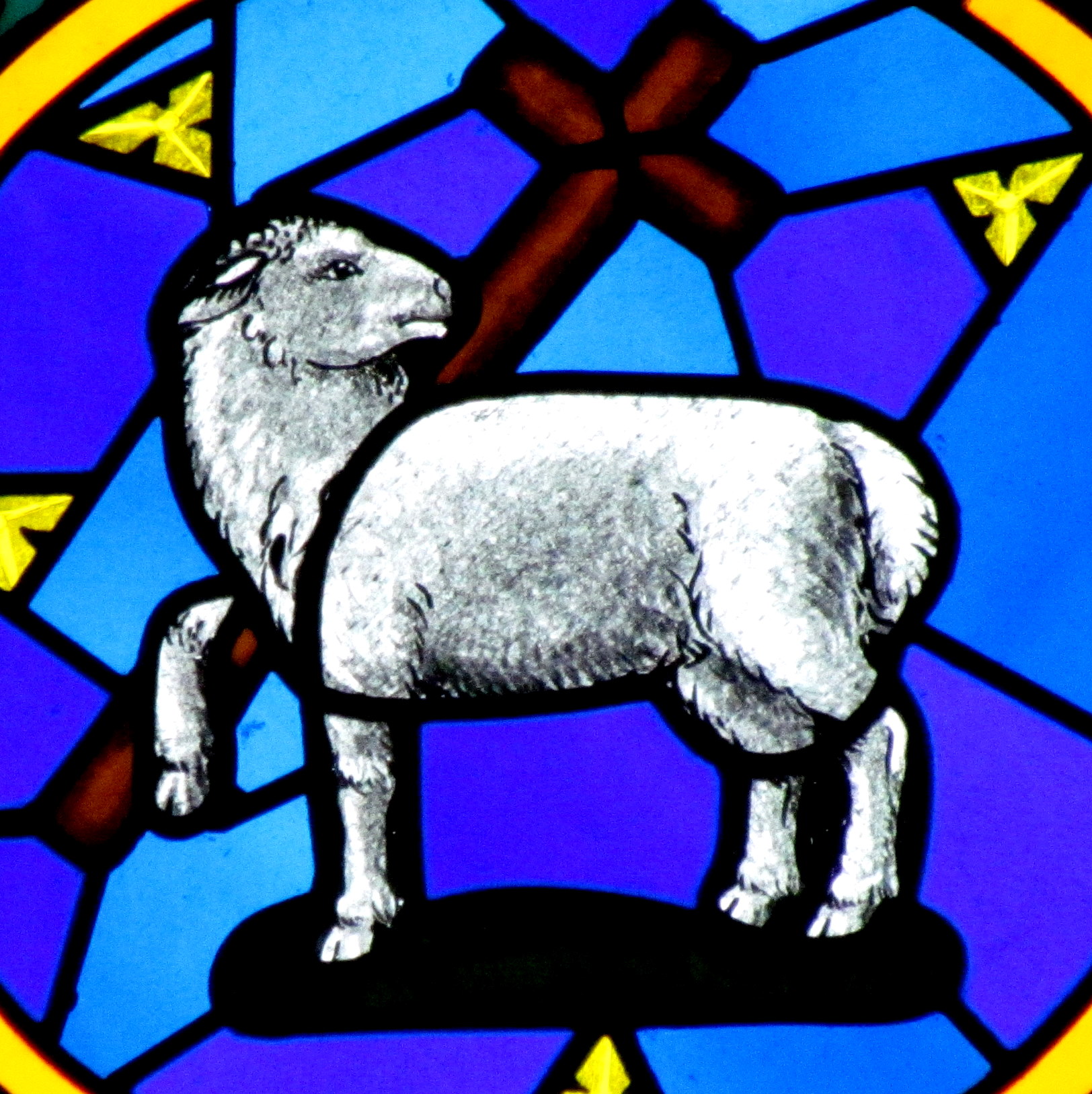
The Lord we are to follow, the King we are to serve, is not “a roaring lion looking for someone to devour” (1 Peter 5:8 NIV). He is a Lamb bearing the marks of slaughter. He has won his kingdom not through violence and force and coercion but through self-sacrificing love. “How can that be?” you ask. “That seems like weakness not power,” you say. Yeah, it does. The kingdom of God is quite the paradox, isn’t it?
I don’t know which way American Christians will decide to go. I don’t know whether the American church will decide to follow the example of James and John outside the Samaritan town or listen to Jesus. I don’t know whether American Christians will choose to use the power of coercion, worldly weapons, and even violence to establish their kingdom or whether they will trust the power of the word of God and the persuasive work of the Holy Spirit. But I know that I intend to follow the Lamb who was slain and not a “roaring lion seeking someone to devour.”
© 2025 Gary A. Chorpenning (gachorpenning.com)
Related posts:
Pastor Note #138: The Way of Jesus: Selfless Service OR Coercion and Domination?
Pastor Note #142: Violence & Cruelty in America: Who Is My Neighbor?
Pastor Note #100: Evangelical Fear and the Turn Toward “Coercive Christianism”: An Essay Part 1 of 3
Pastor Note #101: Evangelical Fears and the Turn Toward “Coercive Christianism”: An Essay Part 2 of 3
Pastor Note #102: Evangelical Fears and the Turn Toward Coercive “Christianism”: an Essay Part 3 of 3
Photos by GAC

 Gary Chorpenning's Notebooks
6 thoughts on “Pastor Note #143: Coercion & the Kingdom of God”